


India’s startup ecosystem is witnessing a sharp rise in leadership changes in 2026, with companies across sectors restructuring their top management teams to prepare for expansion, profitability, and long-term growth.
From CEOs and CFOs to Chief Business Officers and COOs, startups are actively reshaping leadership as competition intensifies and operational efficiency becomes a bigger priority.
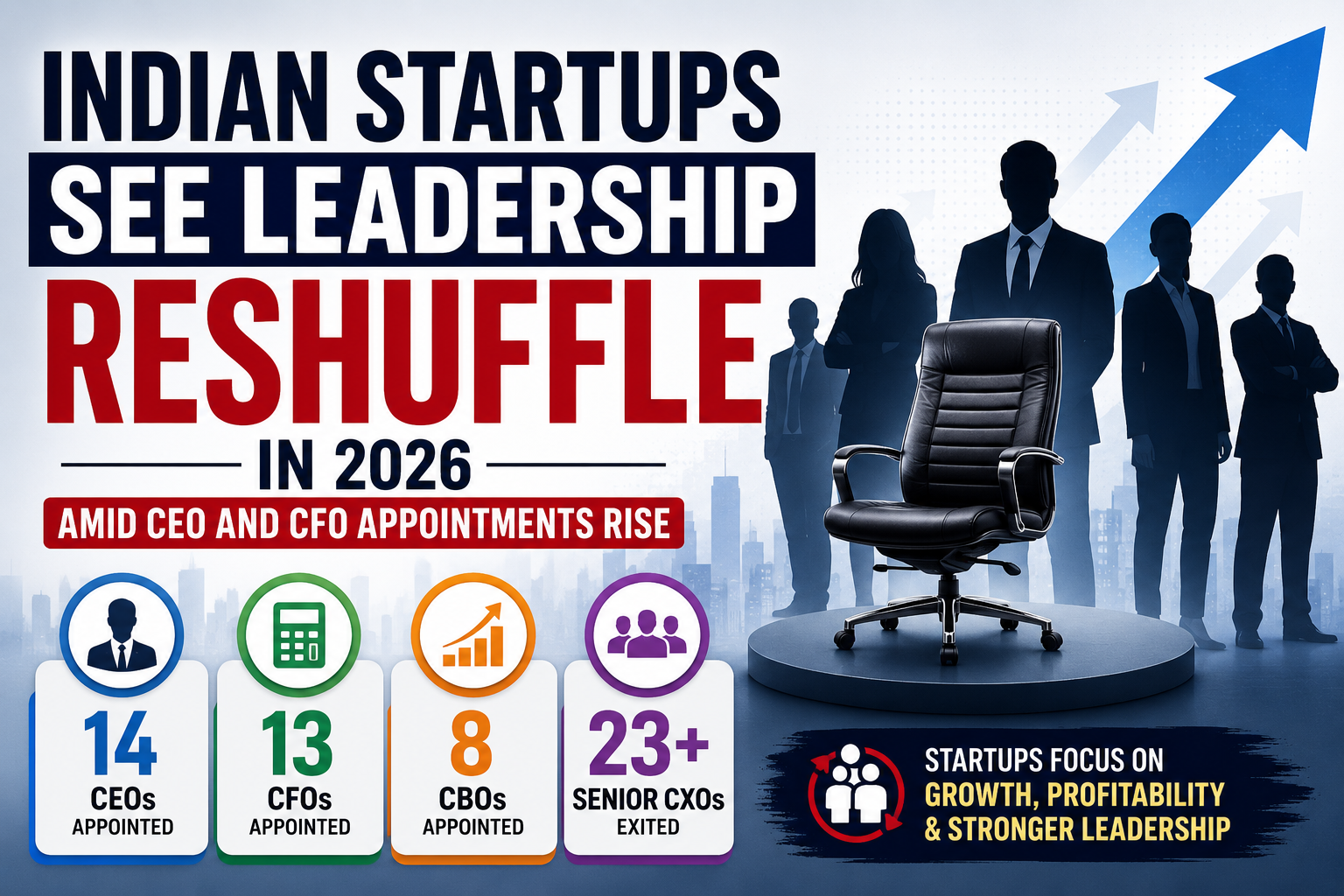
According to data compiled by Malik times, Indian startups have already appointed 14 new CEOs so far in 2026, along with 13 CFOs, 8 Chief Business Officers (CBOs), and 5 Chief Operating Officers (COOs). At the same time, more than 23 senior executives exited their roles across the ecosystem.
Leadership Changes Accelerate Across Startups
The pace of leadership reshuffles this year has increased significantly compared to previous years.
In 2024, around 27 new CEOs were appointed across startups, while 2025 recorded nearly 50 CEO transitions. Even before the year reaches its midpoint, 2026 has already witnessed multiple high-profile leadership changes.
The trend reflects how startups are evolving from growth-focused businesses into organizations prioritizing sustainability, operational discipline, and profitability.
Companies such as Slice, Myntra, Atomberg, Livspace, Cashfree, Epigamia, and Kiwi have all seen major leadership changes in recent months.
The shift is not limited to private startups alone. Listed companies including Eternal, Ola Electric, Swiggy, Wakefit, and Awfis have also undergone leadership restructuring.
Key CEO Appointments in 2026
Several startups appointed new chief executives this year, with many companies choosing internal leadership promotions.
Among the major changes, Swiggy elevated Swapnil Bajpai to lead its Dineout and Scenes business. Slice appointed founder Rajan Bajaj as Managing Director and CEO, while Atomberg Technologies promoted Sibabrata (Shibam) as CEO.
Edtech platform Scaler appointed Amar Srivastava as CEO of its online business to strengthen its AI-focused skilling strategy.
Meanwhile, fintech and mobility startups also saw leadership transitions. PB Fintech elevated Sajja Praveen Chowdary as CEO following the departure of Tarun Mathur, while EV startup Zelio E-Mobility appointed Divyanshu Agarwal as CEO.

CFO Hiring Picks Up Across Startups
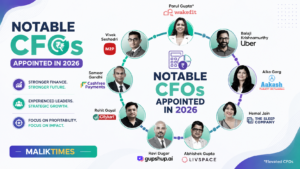
Financial discipline and profitability have become central priorities for startups in 2026, leading to a rise in CFO appointments.
Companies including Wakefit, Livspace, Cashfree Payments, and Gupshup appointed new finance leaders this year.
The appointments indicate that startups are increasingly focusing on cost management, compliance, fundraising readiness, and operational stability amid changing market conditions.
Startups Strengthen Business Leadership
The year has also seen a noticeable increase in Chief Business Officer appointments as startups double down on revenue growth and market expansion.
Companies such as Kiwi, Niyo, and Nucleus Software appointed new business leaders to improve go-to-market execution and customer growth.
Industry observers believe this trend highlights a stronger focus on commercial execution and sustainable business expansion rather than aggressive growth at any cost.

Several Founders and CXOs Exit
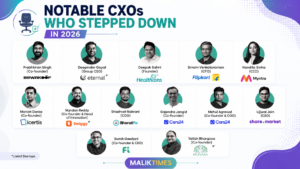
Alongside new appointments, several prominent founders and senior executives stepped down from their positions in 2026.
Among the notable exits, Bewakoof co-founder Prabhkiran Singh exited after 14 years, while Eternal founder Deepinder Goyal stepped down as Group CEO and moved into the role of Vice Chairman.
At Livspace, co-founder Saurabh Jain exited following layoffs linked to the company’s AI-led operational restructuring.
Other major exits came from companies including Flipkart, Myntra, Cars24, and PhonePe.
Why Leadership Churn Is Increasing
Industry experts say leadership changes in startups are often driven by major business milestones such as funding rounds, IPO plans, restructuring, profitability pressure, or shifts in company strategy.
As startups mature, many companies begin replacing survival-focused leadership structures with executives experienced in scaling operations and managing larger organizations.
The rise in Chief Business Officer appointments also reflects how startups are placing greater emphasis on revenue generation, customer acquisition, and business expansion.
At the same time, many professionals transitioning from large corporations into startups often struggle to adapt to startup culture, leading to shorter tenures.
The growing number of leadership changes across India’s startup ecosystem highlights how the sector is rapidly maturing.
Rather than signaling instability, the trend reflects an industry adapting to new market realities where operational efficiency, profitability, and scalable growth are becoming more important than aggressive expansion alone.
As Indian startups continue to evolve, leadership restructuring is likely to remain a key part of the ecosystem’s next phase of growth.
 Updated on May 12, 2026
 Content Verified
Fact-checked by Malik Times Research